Snowbird Car Shipping

Best States for Snowbirds and How to Ship Your Vehicle There

Explore top snowbirds states and how to ship your car safely. Plan your seasonal move with ease using Revoway.

Best States for Snowbirds and How to Ship Your Vehicle There
Published on

10 July 2026

Map illustration

Tell us about your project

Click the button to start! We are here to be part of your car shipping story. Let's create a lot to tell!

To escape freezing temperatures, snow, and icy roads, many retirees, remote workers, and seasonal travelers head south each winter. These individuals are commonly known as "snowbirds." However, successful snowbird shipping isn't simple. Driving hundreds of miles can be time-consuming and physically demanding, and it can expose your vehicle to wear and tear. That's why many snowbirds use professional snowbird shipping transports for convenience and safety. Choosing the right destination matters. While several states offer warmer climates, some go further by providing a better combination of affordability, amenities, healthcare access, outdoor recreation, and snowbird-friendly communities.

For these reasons, this article covers the best and top destination states, including how to get your car there hassle-free.

Why Snowbirds Choose to Ship Instead of Drive

People who move seasonally aren't just commonly known as snowbirds, they're proactive and deliberate with their travel decision-making. Here is why they proactively choose to ship instead of driving while moving south in winter:

  • Long-Distance Driving Adds Significant Wear and Tear: More mileage means more wear and tear on the vehicle. Many snowbirds' moves exceed 1,000 to 1,500 miles each way. The more a vehicle is worn, the more its lifespan and value decrease.
  • Older Vehicles Face Greater Mechanical Risk: Most snowbirds are retirees. Obviously, they have been using their vehicles for years, making them much more vulnerable to mechanical failure and wear and tear. That can be horrific.
  • Health and Comfort Matter: Cross-country travels often last multiple days. According to the industry report, many snowbirds choose shipping to avoid intense fatigue, physical strain, driving stress, and more.
  • The Convenience Factor Is Hard to Ignore: Driving south can take several days, requiring fuel stops, meals, accommodation, and route planning—it can be overwhelming. Snowbirds prefer to use auto transport companies to eliminate these episodes and provide convenience.
  • Reliability and Peace of Mind: Trust and transparency are major qualities of a safe auto shipping company. Ensure you properly vet the carrier if it's your first time with them.

Top States Snowbirds Flock To Each Year

Every year, hundreds of snowbirds leave colder northern states and migrate to warmer destinations due to winter. These states, according to their hierarchy, include:

  1. Florida
  2. Arizona
  3. Texas
  4. California
  5. South Carolina

Florida

Florida is the snowbird capital of America and the most popular snowbird destination because it's warmer in winter (year-round sunshine), has lower taxes, and has an elaborate retirement infrastructure. Age 60+ is the predominant demographic of snowbirds in Florida, with over 44,504 net gains from retirees in 2023.

Arizona: Warm, Dry Winter and Active Retirement Communities

Arizona is another major destination for snowbirds. It not only provides warmth in winter but also offers a supportive community for snowbirds and a moderate cost of living.

Texas: Affordable and Mild Winter Climate

Texas has been attracting more snowbirds for its warm weather and more moderate housing costs compared to Florida and Arizona.

California: Ideal Climate and Coastal Lifestyle

California attracts snowbirds who prioritize lifestyle and recreation. California destinations, including Palm Springs, San Diego, and Orange County, are more popular.

South Carolina: A Fast-Growing Alternative to Florida

South Carolina is currently the fastest-growing snowbird destination in the U.S.; 14,676 retirees aged 60+ have been recorded as migrating to the state. It helps snowbirds connect to and network in like-minded communities.

Why Do These States Dominate Snowbirds' Migration?

The most successful snowbird states share similar qualities such as milder temperatures, retiree-friendly tax environments, accessible healthcare, active social communities, and strong transportation networks.

How Snowbirds Car Shipping Actually Works

According to shipping industry stats, over 1 million seasonal travelers relocate between northern and southern states every year, creating the largest recurring shipping circle of the U.S. auto transport industry. Because of this, professional auto shipping is preferred to driving 1,000 to 1,500 miles twice a year. How does it work?

  1. Request a Quote and Book Transport: The process starts with requesting a quote based on your pickup/delivery locations, vehicle size/condition, transport type (open or enclosed), and shipping date. Snowbird demand surges in the fall (southbound) and spring (northbound); it's recommended that you book early, at least 3–4 weeks in advance, to secure better pricing and available carriers.
  2. Vehicle Inspection Before Pickup: The carrier will thoroughly inspect your vehicle, document its condition in your presence, and hand over a document for you to sign (bill of lading). This document shows your consent to the shipment of your vehicle and every recorded state of it.
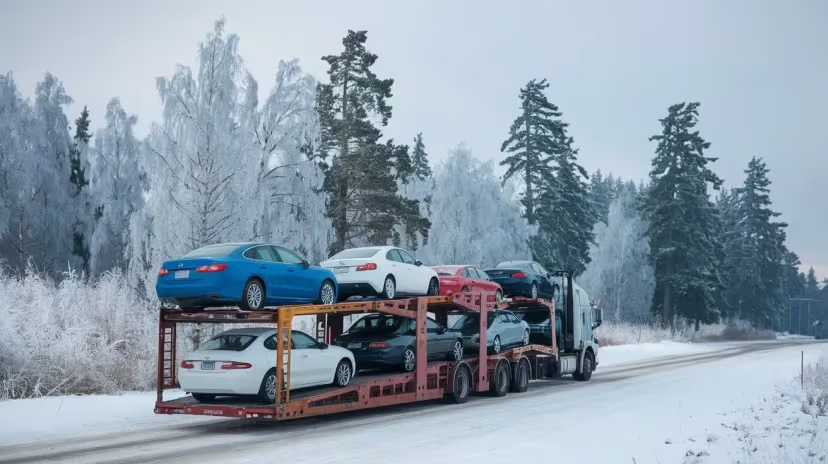
  3. Carrier Pickup and Transport: In this phase, the vehicle is loaded onto a transport truck. Open transport is the most popular, affordable, and widely available option. Enclosed transport is typically for luxury vehicle shipments.
  4. Vehicle Delivery and Final Inspection: Upon arrival, the vehicle owner (you) will conduct a final inspection to confirm that your vehicle arrived safely. After confirming that the vehicle is in good condition, you will sign the inspection report.

Why Do Snowbirds Choose Shipping Over Driving?

  • To avoid long-distance journeys; several hours on the road can be stressful.
  • Protect the vehicle from direct exposure to winter weather and road hazards.
  • Safeguard vehicles against excessive mileage and deterioration.
  • Speed—Snowbirds ship their vehicles and take flight to arrive at their destinations faster.

Best Time of Year to Ship as a Snowbird (and Why Timing Matters)

The best time to ship a vehicle is 2–4 weeks before the major migration rush: late September for southbound moves and late February for northbound moves.

When Demand Spikes (Peak Months)

  • Southbound (to Florida, Arizona, Texas): October to November
  • Northbound (back to northern states): March to April

These are the busiest periods, and thousands of snowbirds relocate annually, making these months among the busiest in the auto transport market.

Why Timing Matters

  • Prices Increase During Peak Season: When demand rises, carrier capacity and operating costs increase, directly affecting shipping costs. Industry estimates show that peak snowbird season can raise shipping prices by roughly 10–20% compared with off-season periods. For instance, New York to Florida runs $800–$1,000 off-peak versus $950–$1,200+ in peak season.
  • Delivery Times Get Longer: Delivery takes longer in October, November, March, and April because carriers often handle higher volumes.
  • Early Booking Can Save Money: Many transport companies recommend booking at least 2–4 weeks in advance during the snowbird season.

Action Tips for Snowbirds

  • Book early: 2–4 weeks in advance. This is the single most effective way to cut costs and beat the traffic.
  • Be flexible with pickup dates. 2–3 days' pickup timing often gets you a good rate, as faster delivery or pickup windows attract premium prices.
  • Choose an open transport option if you don't necessarily need enclosed shipping.
  • Avoid last-minute booking in October and March. Shipping prices tend to spike in these times.
  • Use terminal-to-terminal delivery instead of door-to-door as much as you can. It reduces costs and other logistical bottlenecks.

How Much Does Snowbirds' Car Shipping Cost?

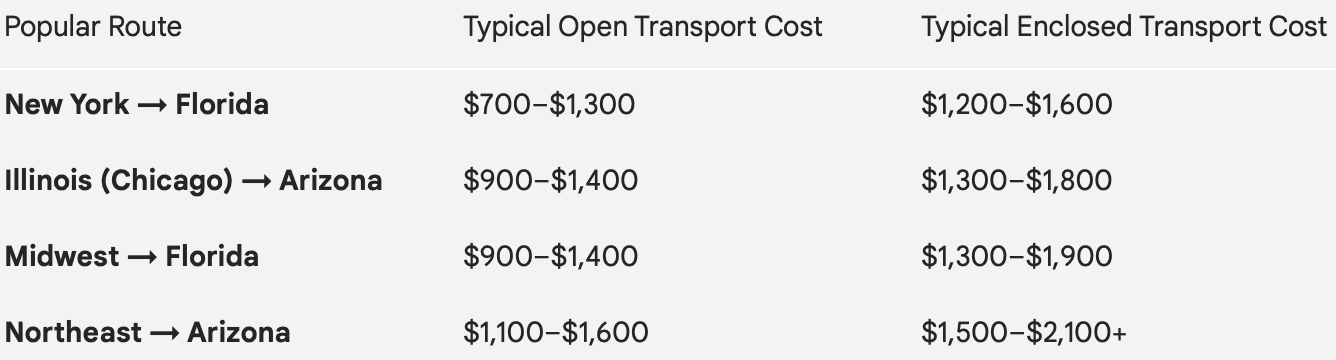
Snowbirds' car shipping costs between $700 and $1,400 for the most popular one-way routes through open transport. The prices may increase during peak migration seasons (October–December and March). Other price-influencing factors include distance, vehicle size, transport type, pickup/delivery locations, and seasonal demand.
What Affects Snowbirds' Car Shipping Costs?

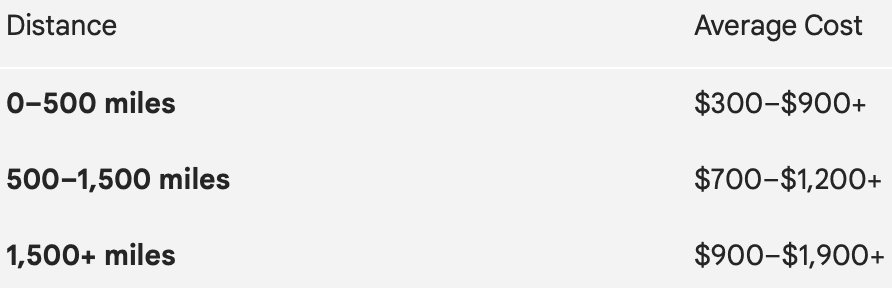
  • Distance: While longer distances cost more, they cost less per mile compared to shorter distances. Most shipments over 1,500 miles average $900–$1,900, compared with $300–$900 for trips under 500 miles.
  • Vehicle Size and Weight: A vehicle's weight and size determine exactly how much space it occupies on the carrier, and the carrier's direction affects the shipping price. Larger vehicles like SUVs, pickup trucks, and vans cost more.
  • Transport Type: Open transport is 30–60% cheaper than enclosed transport. Enclosed transport seems pricier because it offers added protection against weather, debris, and other road hazards for luxury, classic, and exotic vehicles.
Popular Route Cost Estimates

Popular Route Cost Estimates


Average Shipping Cost by Distance

Average Shipping Cost by Distance

Average Shipping Cost by Distance


Across all distances, the average consumer pays approximately $1,190–$1,215, depending on route, vehicle type, and transport conditions.

Tips for a Smooth Vehicle Shipping Experience

To get a seamless shipping experience, follow these practices:

  • Clean Your Vehicle Before Pickup: A clean vehicle makes it easier to identify defects such as paint issues, dents, scratches, and other cosmetic damage during pre-shipping inspections, creating an accurate Bill of Lading (BOL) and simplifying insurance claims should there be damage down the road.
  • Remove Personal Items: Removing personal items from your vehicle at pickup helps you comply with transport regulations and protect your vehicle during transit by reducing extra weight.
  • Photograph and Document the Condition of Your Vehicle Before Pickup: Before handing over the keys, take clear photos of your vehicle from multiple angles (front, rear, both sides, roof, and wheels), close-ups of any existing dents or scratches, and a photo of the odometer reading. These photos serve as valuable evidence should you need to file an insurance claim.
  • Confirm Insurance Coverage Before Shipping: Before your vehicle is loaded, ask the transport company what is covered, including cargo insurance coverage limits, exclusions, and whether additional coverage is recommended for high-end vehicles. Ensure you only use fully insured auto carriers.
  • Know What to Do on Delivery Day: Inspect your vehicle carefully before signing the Bill of Lading, compare its condition with the photos taken before pickup, and report any concerns before accepting delivery or signing the inspection paperwork.

Conclusion

Ready to head south? Ship smart this season. While you're moving south in winter to enjoy good weather conditions in Florida, Arizona, California, or South Carolina, you don't have to experience any stress or hiccups in the process. Use only a certified, fully insured car-shipping service you can trust. That's what Revoway provides. If you're planning on a snowbird move, get your quotes here.

Frequently Asked Questions

What is the cheapest way to ship a car as a snowbird?

Use open transport, flexible pickup windows, and off-peak booking.

How far in advance should snowbirds book car shipping?

3–6 weeks ahead for peak season. Early booking gets you better rates.

Can I put my belongings in my car when shipping it?

Yes. Generally, there is a 100 lb limit; anything above that is not acceptable. Plus, if you ship any luxury items or glassware and things go south, the auto carrier is not liable for the loss.

Is my car insured during transport?

Yes. Carrier liability coverage insures your vehicle. But personal auto insurance kicks in when you're shipping prohibited items like jewelry, glassware, etc.

What's the difference between open and enclosed car shipping for snowbirds?

Open transport carries vehicles in open-air containers at 30–60% lower cost than enclosed transport. Enclosed carriers provide an extra level of protection, and when enclosing makes sense is when you're shipping luxury, classic, or exotic vehicles.