

Guides for First-Time Customers
What is a Bill of Lading?
Learn what a bill of lading is & why it matters. Get a free car shipping quote from Revoway.

Hayk Baghdasaryan
21 Sep 26
20 July 2026
Broker vs Carrier: Understanding Who Actually Ships Your Car Most people shipping a car never stop to ask one important question: who is actually transporting my vehicle, the broker or the carrier? A broker is a coordinator, connecting your shipment with a qualified carrier that fits your route, schedule, and transport requirements. The carrier, on the other hand, is responsible for physically picking up and delivering your vehicle. This guide breaks down the differences between shipping with a broker and a carrier, and how each option affects your pricing, flexibility, and communication.
Guides for First-Time Customers

Click the button to start! We are here to be part of your car shipping story. Let's create a lot to tell!
A car shipping broker is a licensed intermediary that connects customers with licensed auto transport carriers. A broker doesn't own a truck; they facilitate auto shipping operations by matching your vehicle with available carriers that have the right equipment, route, and pricing for you.
Brokers actively arrange shipping activity across the U.S. because they have access to large carrier networks and nationwide capacity.
According to the Federal Motor Carrier Safety Administration (FMCSA), brokers must obtain broker authority (an MC number), maintain a $75,000 surety bond or trust fund, and comply with federal regulations. Confirm that whoever you're dealing with meets these requirements before booking.
Once you request a quote, the broker posts the shipment on industry load boards like Central Dispatch, connecting you with licensed carriers heading your route with available truck space.
Brokers typically earn by adding a percentage to what the shipping company charges. For example, if a customer pays $1,200 and the carrier accepts $1,050, the broker retains the $150 difference as its fee. Some brokers disclose this fee separately; often it's simply built into the quoted price.
A broker's responsibilities include:
A car shipping carrier is the company that owns and operates the truck and trailer used to transport your vehicle. Unlike a broker, which arranges logistics, the carrier handles the physical pickup, transport, and delivery of your car.
To legally transport vehicles across state lines, a carrier must be registered with the FMCSA. Carriers are also required to carry cargo and liability insurance to cover vehicle damage while it's in their care, and they're responsible for handling claims under that policy.
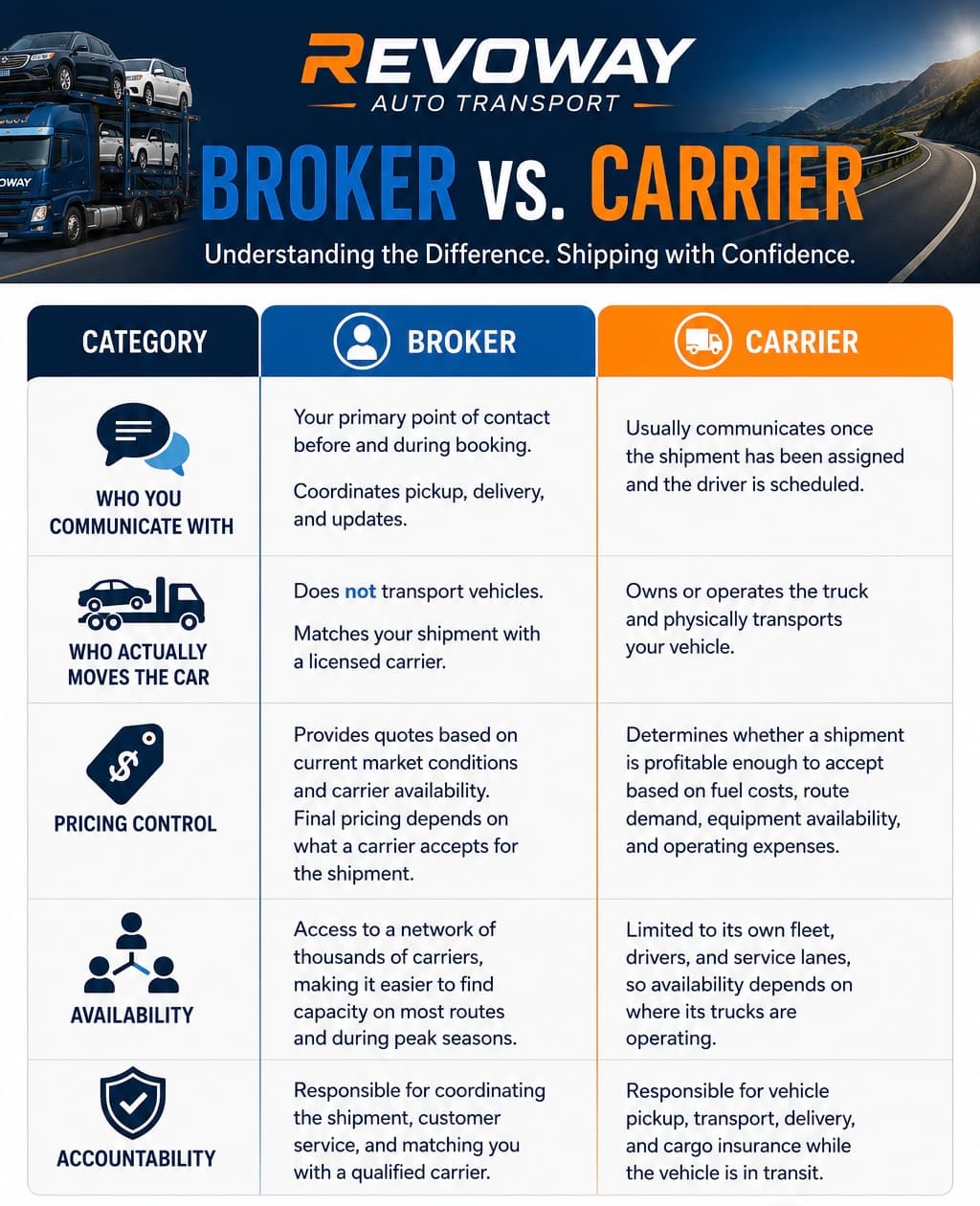
Broker vs Carrier
Most vehicles are shipped through a broker. Here's what that trade-off actually looks like.
Booking directly means a carrier assigns its own truck to transport your car. You get more control, but it doesn't work for every shipment.
Booking directly works well if you've found a reputable shipping company. Otherwise, a broker is usually the more convenient option.
Most people assume the company they book with will also be the one transporting their vehicle. That's often not the case.
The FMCSA estimates there are more than 800,000 registered for-hire interstate motor carriers in the U.S., alongside thousands of licensed brokers who arrange transportation without operating trucks themselves. Knowing which one you're hiring matters.
Here's how to find out:
Tip: Confirm the company's FMCSA registration before booking, and request the assigned carrier's information before pickup.
Neither option works universally. Your choice depends on your priorities, route, and how hands-on you want to be.
Choose a broker for convenience, flexibility, and access to multiple carrier networks; scheduling and delivery are handled for you. Choose a carrier directly if you've identified a reputable company and want to stay actively involved from booking to delivery.
At Revoway, we believe customers make better decisions when they understand their options, which is why we put this guide together. We're a vetted, licensed auto transport broker with decades of experience and a strong track record of customer satisfaction. We'll match your vehicle with the right carrier, open or enclosed, nationwide. Get your deposit-free quote here for your car shipping.
You should always know who you're trusting your car with: a broker who arranges the transportation, or a carrier that physically picks up and drops off the vehicle. Verify their credentials and look them up online before booking. We will help you at Revoway!
It depends on your route, timeline, and how much vetting you want to do. If you've vetted a reliable carrier for your route, that's likely the better option. If you'd rather skip the research, scheduling, and hands-on involvement, a broker is the easier choice.
Not exactly. Broker fees are typically built into the quote, and you can ask to confirm the all-in price. This fee is the broker's commission for handling your shipment.
If you're using a carrier directly, that carrier is liable for damage claims under its insurance coverage. If you're using a broker, the broker isn't directly liable for physical damage, but responsibility still falls on the vetted carrier they assigned. Check both parties' insurance before booking.
Check the company's website and the independent FMCSA SAFER system, where you can confirm registration by entering their MC number. You can also ask for their USDOT and MC numbers directly and verify them yourself in the FMCSA SAFER Web System.
Yes. A transport company can legally hold dual authority as both a broker and a carrier. This means they may own trucks and trailers to transport vehicles directly, while also matching customers with other carriers as an intermediary.
Learn what a bill of lading is & why it matters. Get a free car shipping quote from Revoway.
21 Sep 26
Protect your classic car during transport and avoid common risks. Get a free classic car shipping quote from Revoway.
14 Sep 26