

Guides for First-Time Customers
Car Shipping Deposits: What’s Normal & How to Avoid Scams
Learn what a normal car shipping deposit looks like and how to spot and avoid common deposit scams.

Mike Hovhannisyan
26 Aug 26

Click the button to start! We are here to be part of your car shipping story. Let's create a lot to tell!
See how it differs from your home state rules. Your home state rule generally determines what you owe. Dealers may collect applicable Texas tax at purchase, while private buyers often pay when titling or registering the vehicle.
It depends on the states involved. You may receive credit for tax paid elsewhere or owe a difference. Confirm the rules that apply with your home state's DMV and tax authority before purchasing.
The vehicle must be legally registered and titled under your home state's requirements. Temporary tags and permits let you drive home, but eligibility, validity periods, and application procedures vary.
Option 1: Drive it yourself home.
You may need to stop along the way, buy extra fuel, pay for meals, cover extra mileage, arrange temporary registration, and handle the challenges of a long journey.
Option 2: Ship the car
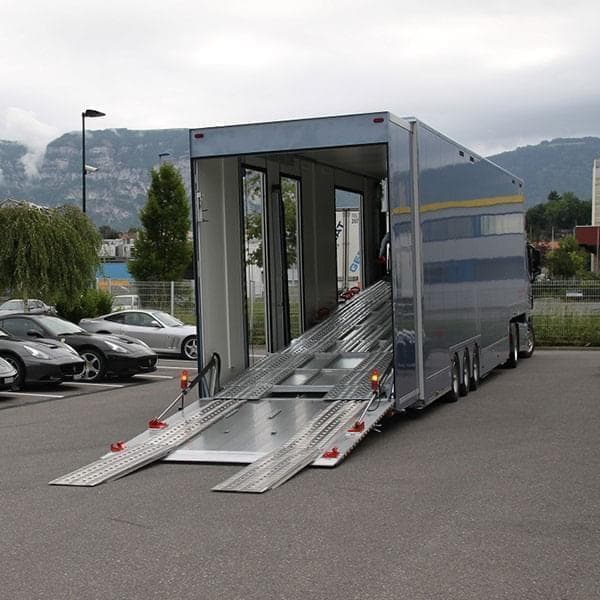
Professional auto transport helps you avoid long drives and reduce delivery mileage. Open transport is generally cheaper than enclosed transport, which provides extra protection for classic, exotic, luxury, or high-value vehicles.
Learn more about how to ship to another state.
This table gives typical cost factors beyond the advertised vehicle price.
According to move.org's 2026 price analysis, nearly 800 car-shipping quotes are reported, averaging around $914 for open transport and $1,342 for enclosed transport.
Compare your options using the full cost of the purchase. For more details, see Car Shipping Costs.
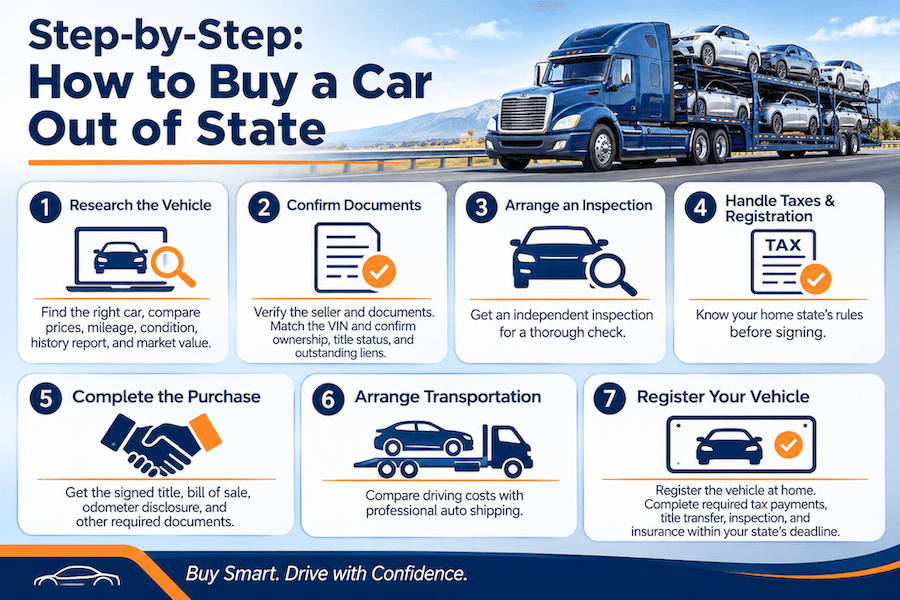
Seven-step guide to buying a car out of state, from vehicle research and inspection to shipping and registration.
Yes. Absolutely. Interstate car shipping exists.
Interstate car shipping typically costs $500–$1,000, but the total cost depends on miles, transport type, season, location, and more.
The cheapest way to ship a car is to choose open transport, book early, use terminal-to-terminal delivery, and ship during off-peak seasons.
It typically takes 1-2 weeks, but it can take longer because of logistics constraints, including the vehicle's condition, route congestion, loading and unloading, and checkpoints.
Properly preparing your car for interstate shipping includes;
Learn what a normal car shipping deposit looks like and how to spot and avoid common deposit scams.
26 Aug 26

Never heard of driveaway service? Discover this car shipping alternative. Learn more!
26 Oct 26