
Is Shipping a Car Safe? A Useful Guide for Everybody
Open car transport

Is Shipping a Car Safe? A Useful Guide for Everybody

Handling over your car to a transport company can feel unsettling—especially when shipping for the first time. It’s a common concern. But you don’t have to be. Safe car shipping depends heavily on physical protection, choosing the right company, understanding insurance, and properly preparing your vehicle before shipping.

This article breaks down every factor to help you enjoy affordable, safe, and stress-free shipping. Let’s get into the full breakdown below.

What Does "Safe Car Shipping" Actually Mean?

Safe car shipping is more than protecting your vehicle from minor scratches and dents.

It’s a three-dimensional thing: protecting the vehicle physically, protecting the owner financially and legally, and ensuring reliable communication through the shipping process.

1. Physical protection during transit

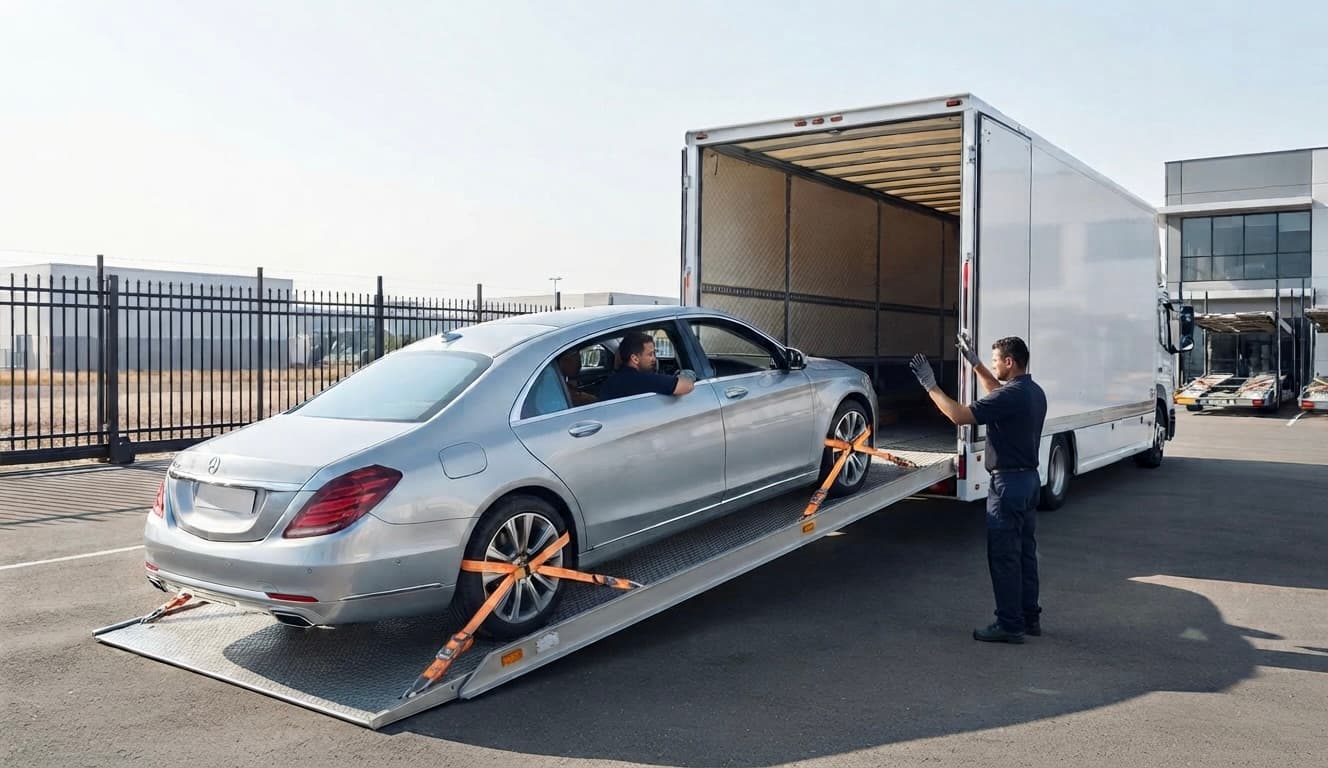
Physical vehicle protection starts with proper vehicle loading and securement, using the appropriate transport type (open or enclosed), and pre-inspection and post-inspection of the vehicle's condition, documented in the bill of lading (BOL).

A successful auto shipment is more than just physical protection; it includes full cargo insurance, meaning the vehicle owner is not liable for damage in transit. The vehicle owner also understands their responsibility before signing the bill of lading (BOL). And finally, the carrier is registered with FMCSA.

3. Reliable Communication and Delivery

Safe shipping also involves knowing where your vehicle is and having accurate assurance of delivery as promised.

Reliable transport companies typically provide:

  • Pickup and delivery updates
  • 24/7 customer support system
  • Clear estimated delivery windows
  • Prompt notification in cases of weather, traffic, or mechanical delays.

Open vs. Enclosed Transport - Which Is Safer?

Enclosed transport is the safer option because it protects your vehicle from road debris, dirt, weather, and other environmental damage during transit. However, open transport is the industry standard because it is a safe, cost-effective option for everyday vehicles.

The American Trucking Associations note that over 72% of U.S. freight by weight is safe and reliable for commercial vehicle transportation when handled by licensed carriers.

Here’s the breakdown:

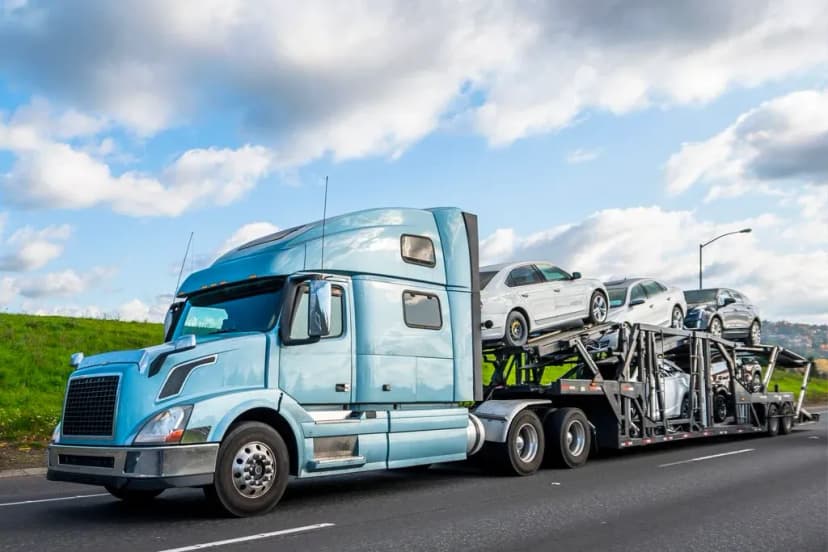
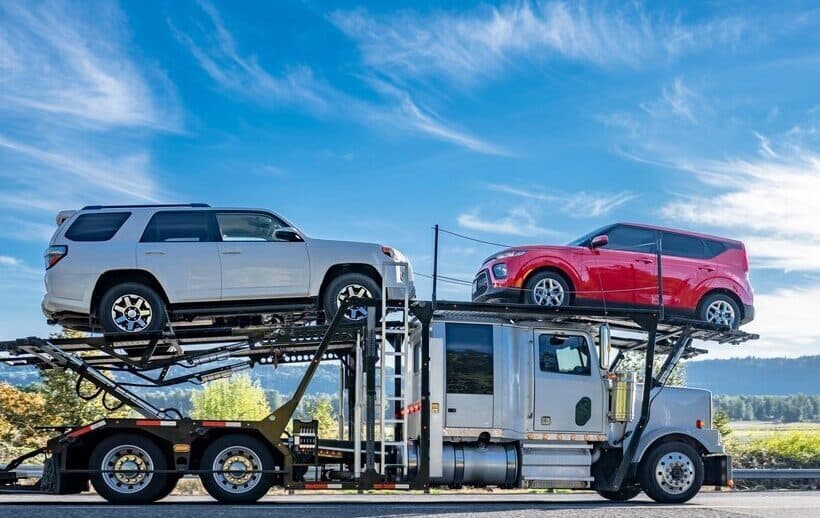
Open transport: Open transport carries typically 7-10 vehicles on an open-air truck at a time. Because open transport allows carriers to transport more vehicles per trip, it is the most affordable and widely available shipping option.

The potential downsides of open transport include:

  • Exposure to rain, snow, hail, and UV sunlight.
  • Exposure to road debris, rocks, and loose gravel
  • Exposure to feces, bird droppings, and insect residue.
  • Reliability with minor cosmetic damage is uncommon, but it’s possible. Unlike enclosed transport, it remains exposed.

Enclosed Transport: Enclosed transport places vehicles in a fully covered trailer, shielding them from external elements throughout the trip.

It offers protection against:

  • Weather conditions such as rain, hail, snow, excessive sun
  • Flying road debris
  • Dust and contaminants
  • And higher security from vandalism or theft during transport stops.

It typically carries 2-6 vehicles and costs 30-50% more than open transport. Highly recommended for new, high-end, exotic, luxury vehicles.

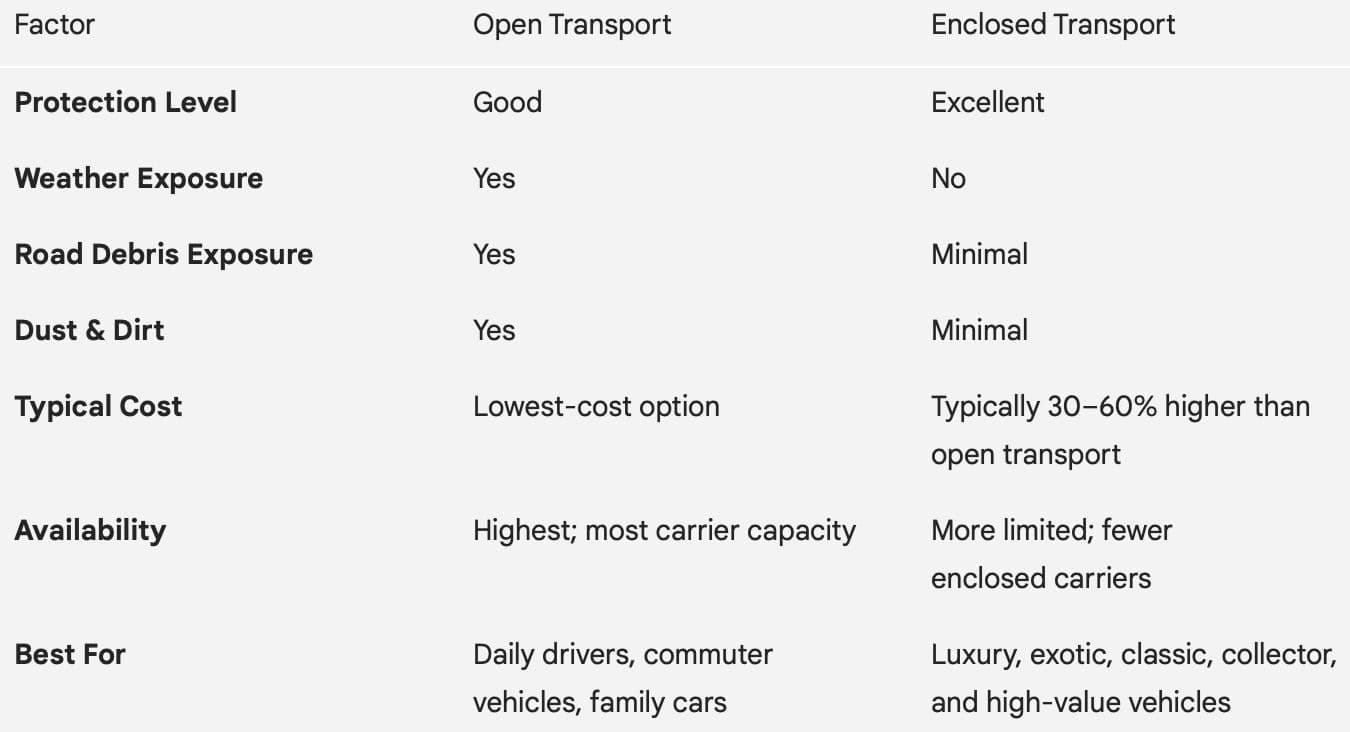
Comparison at a Glance

Comparison

Comparison


How to Choose a Safe, Reputable Auto Transport Company

One of the factors that contributes to enjoying safe and successful auto transport is choosing the right auto transport company.

Here’s how to do it:

1. Verify FMCSA Registration and MC Number

The Federal Motor Carrier Safety Administration (FMCSA) regulates interstate shipping activities, including the brokers and the carriers. This makes the FMCSA the first place to start.

Use the FMCSA’s Safer and Licensing & Insurance (L&I) databank to confirm the following:

  • Active operating status
  • Insurance on file
  • Safety records (for carriers)
  • Matching the company name with the quote.

2. Read Reviews Across Multiple Platforms

Online reviews are among the most valuable modern-day investigative resources for various companies, including auto companies. You can see what people are saying about them in less than a minute by checking their websites.

Compare the reviews on:

  • Google reviews
  • Better Business Bureau (BBB)
  • Transport Review.
  • ConsumerAffairs
  • Yelp

You can check for consistent testimonials on on-time pickup and delivery, communication, vehicle condition at delivery, billing accuracy, and claims handling. Can’t go wrong with you.

3. Watch for Red Flags

Avoid companies that exhibit the following signs:

  • An unusually low quote far below what others are offering.
  • No verifiable physical address or only a PO box
  • No active FMCSA registration or MC number
  • Requesting large upfront payments before working together
  • Looks High-pressure prompting such as "The truck is leaving in an hour.” “Book today or the price doubles tomorrow.
  • No written or cancellation policy.
  • Refusing to provide a written quote.

4. Confirm Insurance Coverage

Ask for proof of:

  • Cargo insurance
  • Liability insurance
  • Coverage limit
  • Claim process.

At Revoway, our advice for car owners is to review the carrier’s insurance coverage before pickup and understand exactly what’s covered during transit.

5. Compare Quotes

Shop around. Don’t just settle on one auto company if you’re unsure. Compare 2–3 different quotes to see what works best for your vehicle and budget. This also helps you spot lowball quotes easily.

Choosing the right auto transport company just got easier with these metrics.

How Carrier Insurance Protects Your Vehicle

Only carriers with insurance can provide financial protection for your vehicle during transport.

Every legitimate interstate auto carrier operating in the U.S. is required by the Federal Motor Carrier Safety Administration (FMCSA) to carry minimum levels of liability insurance. Still, the scope and amount of coverage can vary by carrier.

Here’s the breakdown.

What Standard Carrier Cargo Insurance Typically Covers

  • Damages caused during loading or unloading
  • Collision damage while cargo is in transit
  • Fire, theft, vandalism, severe weather damage, and damages from negligence.

A typical cargo coverage range ranges from $100,000 to $1 million or more per truck, depending on the carrier's operations and the equipment being used.

What Carrier Insurance Usually Does Not Cover

  • Preexisting damage before loading (often documented in the Bill of Lading)
  • Personal belongings left inside the vehicle (often prohibited)
  • Mechanical failure unrelated to transport
  • Damage caused by leaking fluid or loose parts.

The Bill of Lading becomes more critical here. They establish the vehicle's condition before transport and determine whether a damage claim is consistent and valid.

Understanding Gap Coverage

Gap coverage is the protection that fills the difference between the carrier's cargo insurance coverage and your vehicle’s actual financial worth.

You should consider additional protection if:

  • Your vehicle is worth more than the carrier's cargo policy limit.
  • You’re shipping a luxury, exotic, colorful, or classic vehicle.

Requesting the Insurance Certificate Before Booking

One critical step shippers, especially first-time auto shippers, often overlook is verifying the carrier's insurance before paying the deposit.

Ask for:

  • A current Certificate of Insurance (COI)
  • Cargo insurance limit
  • Liability exclusions
  • Policy effective dates
  • Insurer's name

Preparing Your Car to Minimize Risk During Shipping

Proper car preparation can help you avoid risk and damage claims. The professionals are only responsible for transporting your vehicle safely while you prepare it for shipping yourself. It’s simple and easy. Here’s how:

Complete a Thorough Pre-Shipping Inspection

Carefully examine the vehicle before the carrier arrives.

Inspect and document:

  • Existing dents, scratches, chips, cracked glass, and wheel damage.
  • The condition of mirrors, lights, hood, roof, bumper, and underbody (if visible).
  • The current mileage and fuel level. Leave about 1/4 tank (about 25%) of fuel.

Inspection and documentation of a vehicle's condition protect owners from complications in situations of damage claim processes.

Photograph Every Angle Before Handoff

Photos are a significant form of evidence if damage occurs during transit.

Take a clear photo of:

  • The roof, the rear, and both sides.
  • Front, hood, and trunk
  • The wheel and tires
  • Close-up shot of exterior and interior

Remove Personal Belongings

Ensure you remove all personal belongings before shipping. This is the industry stance.

Due to:

  • Personal belongings are generally not covered in case of damage or theft.
  • Loose items can shift during transit and damage the vehicle’s exterior.
  • It adds extra weight that can increase transport costs.

Check for Mechanical Issues

Let the carrier know if the vehicle is:

  • Inoperable or does not start.
  • Has brake, steering, or transmission problems, or has fluid leaks
  • Has extremely low ride height.

This eliminates unnecessary delays, risks, and struggles as it helps the carrier come prepared with equipment and auxiliaries to load and transport your vehicle safely.

Disable Alarms and Leave One Key

Before pickup:

  • Turn off all vehicle alarms and
  • Give the carrier one working ignition or key fob. These make your whole shipping experience safer and easier.

Door-to-Door vs. Terminal Shipping - Which Is Safer?

While door-to-door auto transport delivery is the safer option for many vehicle owners, terminal-to-terminal delivery is considered risky and slow, even though it helps reduce shipping costs. Here is the breakdown:

  • Door-to-door shipping: fewer touch points and lower risk.

For this option, your car is picked up and delivered to you at your chosen address, direct destination, or virtually at your doorstep.

It is mostly chosen because it is faster and reduces risk by loading and offloading the vehicle once—no stops, storage, or administrative errors.

  • Terminal Shipping: More handling means more exposure.

Terminal shipping is generally safe and cheaper. But it requires dropping your vehicle at a storage facility before transport and collecting it at the terminal after delivery.

It has more loading and offloading events compared to door-to-door, increasing exposure to theft (according to the FBI, cargo theft frequently occurs at storage facilities), dents, and scratches.

Door-to-door is a better choice than terminal-to-terminal, but it all depends on what type of vehicle you’re shipping, your budget, and the quality of service you need.

Conclusion

Getting a safe car shipping experience is possible. But it comes from choosing the right transport method, using a vetted carrier, having verified insurance, and ensuring quality vehicle preparation. These factors collectively guarantee safe auto shipping, not individually.

Do some research before you book. It makes everything much easier.

FAQ

Is enclosed transport really worth the extra cost?

Yes. Enclosed transport is worth the extra cost because it covers and protects the vehicle from weather-related damages (hailstones, rain, severe UV rays), loose gravel, dirt, road debris, and even theft.

How do I verify a car shipping company's insurance?

You can easily verify a company’s insurance active status through FMCSA’s Safer and Licensing & Insurance (L&I) databank.

What is the safest car shipping company?

There is no safest car shipping company per se. There are only reliable and fully insured car shipping companies.

Can I track my car during transport?

Yes. You can easily track your car during transport, as reputable auto transport companies provide 24/7 customer support to keep you informed of its milestones throughout the shipping process.

What should I do if my car is damaged during shipping?

Report damage to the auto transport company immediately after discovering the damage.

Share this post

Understanding the Benefit of Open Auto Transport
Open car transport
Understanding the Benefit of Open Auto Transport

Discover why open auto transport is the preferred choice for safe, cost-effective, and reliable vehicle shipping. Ideal for families, military members & long-distance moves.

Olivia Rhye
Hayk Baghdasaryan

14 Jan 26