

Guides for First-Time Customers
Corporate Relocation Car Shipping Guide
A corporate relocation car-shipping guide for companies. Get a free quote from Revoway for seamless employee moves.

Hayk Baghdasaryan
29 Sep 26
Shipping a car overseas? Learn costs, ports, and required documents. Learn more!

Click the button to start! We are here to be part of your car shipping story. Let's create a lot to tell!
280 million-plus containers are moved each year globally through liner shipping, and you can be a part of massive international logistics when you ship overseas. Whether you're an expat, a family, or a military person relocating, navigating international & overseas shipping can be a bit challenging. You may wonder which documents are required, how to ship your vehicle safely, and other international car shipping questions you need answered.
In this guide, we’ll answer the essential questions about international & overseas shipping, giving you the information you need to prepare properly and move safely and with less hassle. Let's dive in.
Overseas car shipping is a multi-step logistics process: inland transport—export port—ocean transit—destination customs—final delivery.
Ocean, or sea, shipping is the backbone of international freight movement, accounting for more than 80% of global trade by volume.
1. Inland Pickup → Departure Port
The vehicle is collected from the owner (seller, residence, dealership) and transported to the departure port by truck or another inland service.
The cost depends on Distance, vehicle size, route, and local transport conditions.
2. Export Processing → Ocean Vessel
At the departure point, the vehicle is inspected thoroughly and loaded onto the vessel using any of these methods:
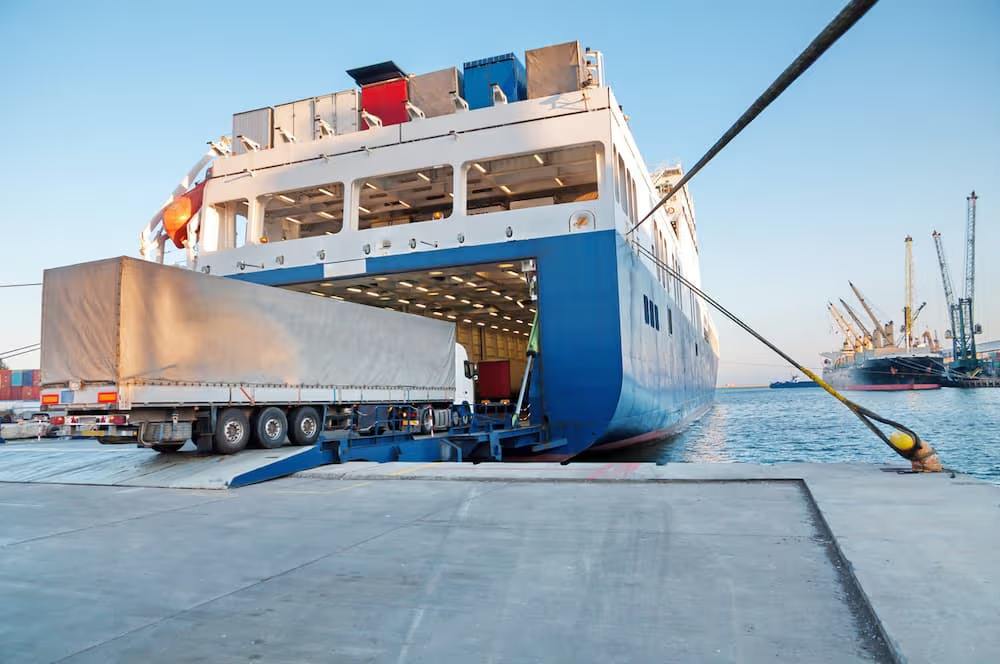
Ro-Ro: the vehicle is driven into a specialized vessel.
Container: the vehicle is secured inside a shipping container.
3. Destination Port → Customs Clearance
Once the vehicle arrives, owners don’t just pick it up. It must clear customs before it can leave the port.
4. Final Pickup → Delivery
After customs inspection, they release the vehicle and make it ready for pickup.
The process could be door-to-door delivery, local trucking, or customer pickup.
The whole process can be summed up as pickup—export port—ocean freight—destination customs—port release—final delivery.
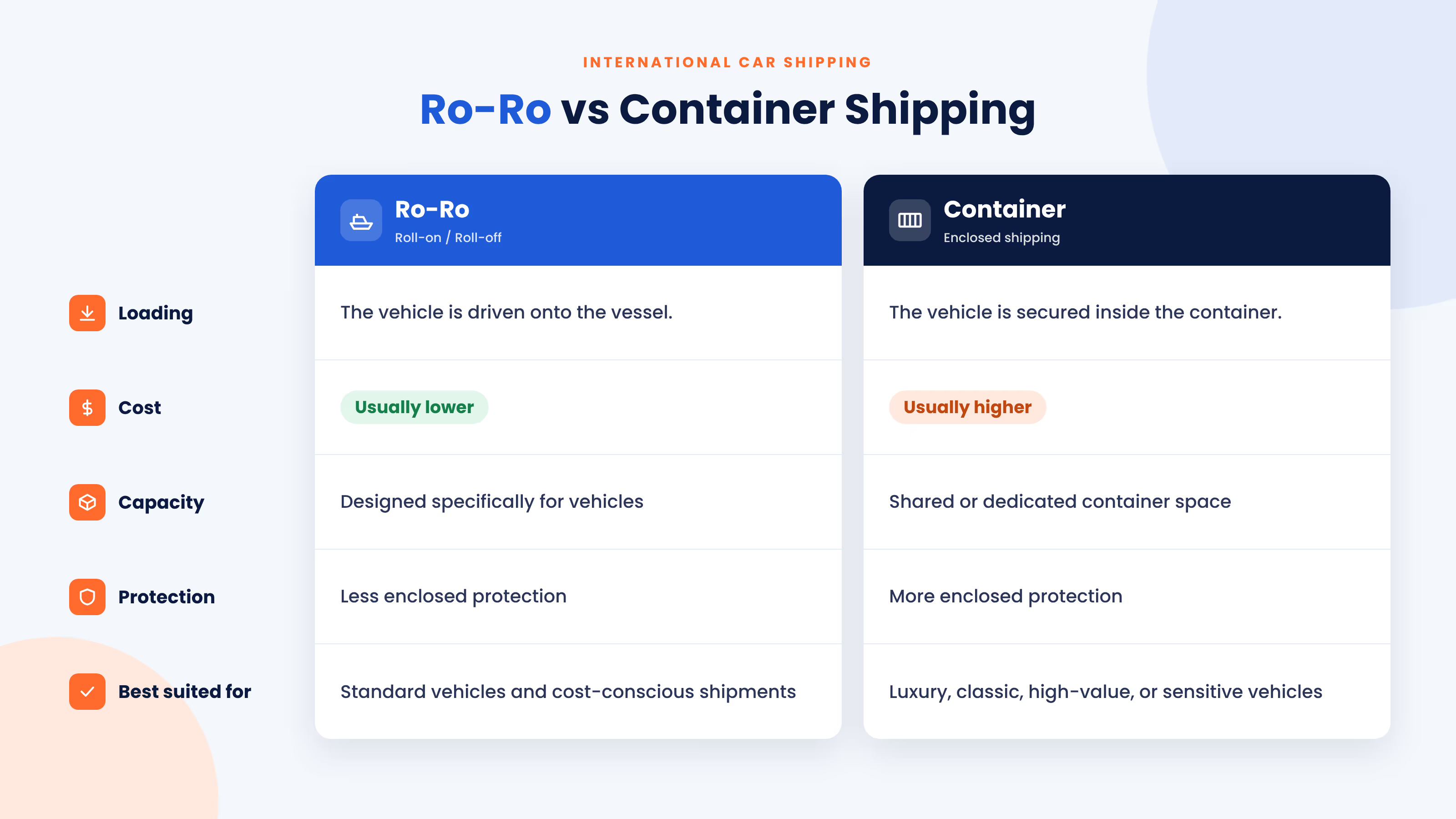
Infographic comparing Ro-Ro and container shipping across loading, cost, capacity, protection, and suitability.
There's no universal international shipping price because many factors determine it.
Here they are:
International shipping requires more documents than local shipping. So, you will need to prepare these required documents:
Document: Why it matters
Establishes ownership and supports export/import processing. For U.S. exports, CBP requires ownership documentation and vehicle identification information; used-vehicle export filings generally require advance submission. (U.S. Customs and Border Protection)
Identifies the shipper/importer and may be required for customs or shipping documentation.
Required for vehicles leaving the U.S.; CBP generally requires vehicle export information to be filed at least 72 hours before export. (U.S. Customs and Border Protection)
Customs declarations, permits, invoices, and other documents depend on the destination country's rules.
It’s not comfortable to say, but you shouldn't treat the international shipping quote as a guaranteed delivery date.
A typical timeline includes:
Vehicle pickup—original port—export clearance—ocean transit—destination port—customs clearance—release—final delivery.
The following can cause downtime and delay delivery timelines: customs inspections, documentation issues, port congestion, unpaid duties or fees, last-mile transportation, etc.
Plan and schedule around the estimated delivery window rather than a particular date and time. E.g., if the shipping company promises two–three weeks, it could be a day after the third week or earlier.
An incomplete title, incorrect VIN, missing customs documents, or late filing can cause delays.
Because your vehicle is legally registered in the U.S., it doesn’t necessarily mean you can ship it to any country. A country can impose requirements based on:
Make sure you know your vehicle's import requirements, and consult the auto transport company to confirm.
The quoted ocean freight you get is not necessarily the final landed cost.
To be proactive, budget for the vehicle price, transportation, shipping, insurance, customs duties/taxes, port charges, destination fees, and inland delivery.
According to U.S. International Trade Administration notes, tariffs and taxes can be accompanied by additional customs or local fees, meaning the final landed cost can exceed the initial freight estimate.
International shipping becomes easier once you break it into core parts—documentation, method, cost drivers, and using a licensed international auto shipper before committing to your vehicle.
Depending on the distance and other factors, it takes 4–6 weeks on average to ship overseas.
Yes. But you might not pay directly, as your selected auto transport company will add that to your final quote.
No. You can ship your car overseas with or without a title.
Not completely safe, because your vehicle might be exposed to sea salt, road debris, and other external hazards.
The following countries generally have strict import duties: Nigeria, Brazil, Russia, India, and Venezuela.
A corporate relocation car-shipping guide for companies. Get a free quote from Revoway for seamless employee moves.
29 Sep 26

Learn how to check a carrier's DOT number before booking. Ship safely with Revoway. Get your free quote today.
28 Sep 26