
Guides for First-Time Customers
Boat Transport Services: Can I ship a Boat?
Can I Ship a Boat? Yes, you can. See transport methods, cost factors, and prep tips. Learn more!

Hayk Baghdasaryan
12 Oct 26
Find out how to file a damage claim after auto transport and what your car shipping insurance covers.

Click the button to start! We are here to be part of your car shipping story. Let's create a lot to tell!
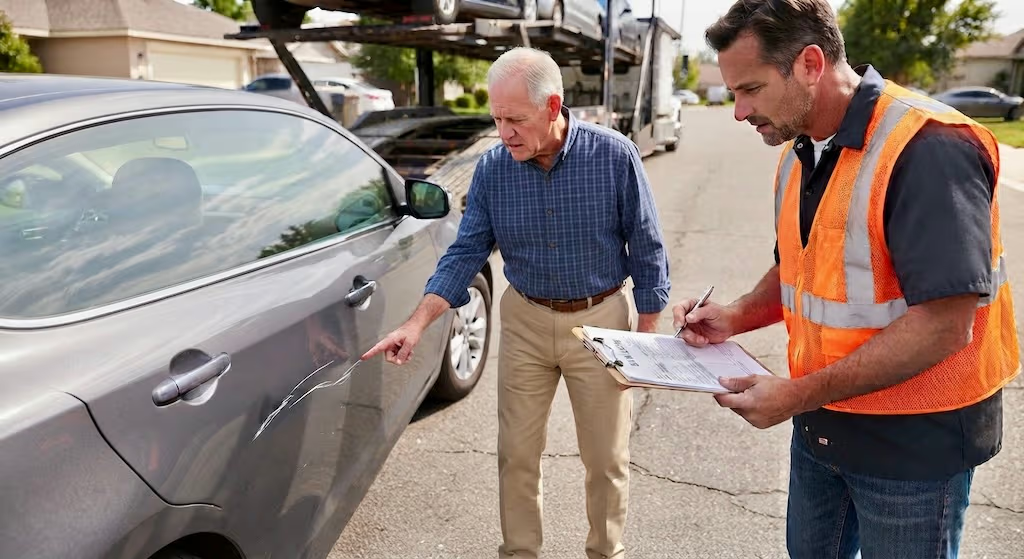
You have your car shipped and finally the day has come to meet it. You are right at the spot, you see the car rolling off the auto transport trailer. A couple of seconds you will touch it and.. gasp! A nasty scratch on the back door. Is it new? Have you spotted it earlier? I can imagine, you are totally confused and frustrated. A concern occurs to your mind, "What on earth do I do now?"
Damage during shipping isn’t very frequent, still, it exists. And here’s the inside secret from a California auto shipping insider: how you react in those first ten minutes after delivery determines whether your claim gets paid or gets thrown in the trash. Don't panic! Here is a step-by-step guide to handling damage, filing an insurance claim, and getting your ride fixed.
National statistics prove it, auto shipping is remarkably safe and the vast majority of vehicles reach their destination completely safe and undamaged.
However, minor mishaps do happen. What issues do those mishaps involve?
Let’s check it out.
Since the damage usually isn’t very serious, the real battle is to prove when it happened. The insurance will cover it or a carrier will pay for it, if only you can prove that the issue didn’t exist before pickup. So always go with the right documentation to avoid further issues. Check out the “What Documents Are Required for Auto Transport?” article, to learn more.
Delivery day is one of the critical days in the shipping process. It’s full of high-stakes, so don’t rush behind the wheel, treat the inspection seriously!
INSPECTION CHECKLIST AT DELIVERY:
Crucial Warning: Once that driver takes off, and you sign a clean piece of paper, your claim is nearly impossible to win. Say something now!
If there is a document in shipping that makes all the difference, trust me, it’s the Bill of Lading (BoL).
If you are completely new in shipping, check out the “Everything First-Time Customers Need to Know about Car Shipping” article, it will help you get a clear understanding of the entire process. However, The BoL is a receipt, contract, and condition report combined into one document. You spot every single scratch in the BoL at pickup and at delivery. Comparing these two data allows you to claim for the damage. So, list the new damage, even if you're in a super rush, the insurance company treats that signature as a legal declaration saying, "My car is perfect, thank you!" Never sign a clean BoL if something looks wrong.
Let’s clear up one very common confusion: Who are you yelling at, exactly?
FYI, a carrier is liable for loss or damage occurring in transit. That’s why we always partner with vetted carriers that have their cargo insured, and the repairs covered.
How about the broker? Trust us, a great California broker won't ditch you! Instead, they will step in to mediate, hunt down carrier insurance details, and press the carrier to make things right.
Ready to get that repair bill paid? Follow these sequential steps to keep your claim moving smoothly:
Organize a folder with all email, text, and note from phone calls, it will make things easy for you.
Federal law requires interstate carriers to carry cargo insurance, but not all policies cover everything. Check out this article to know more.
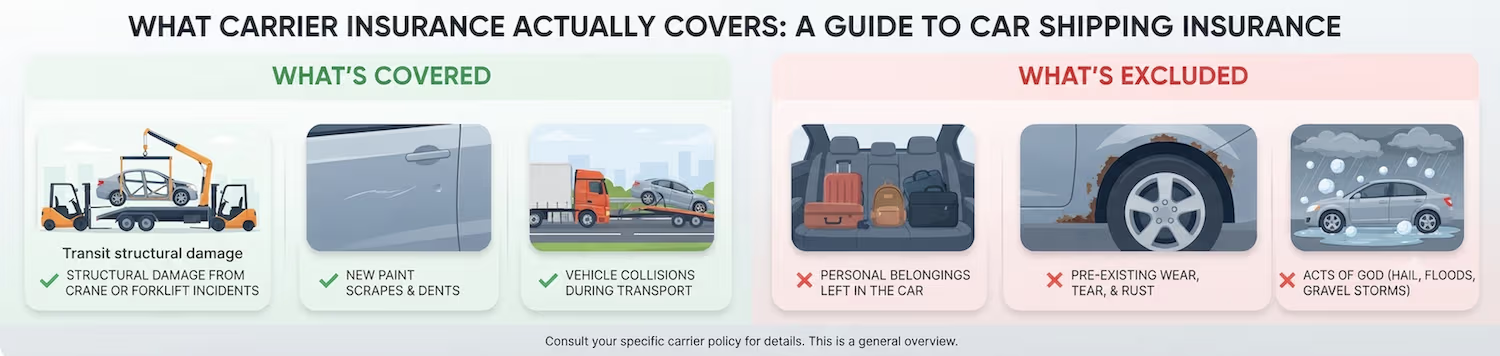
What Carrier Insurance Actually Covers
If a bad hail storm occurs while in transit, the carrier’s policy may deem it a “Act of Nature” and deny coverage. In those rare edge cases, you may have to file through your personal auto insurance policy and they will pursue the carrier on your behalf.
Cases generally go smoothly, if you follow all the sequence of steps. However, what If a carrier drags their feet or unfairly flat-out denies your claim. Don’t give up. You still have options:
It can be a slow, annoying process, but solid inspection photos from delivery day give you the leverage needed to win.
Car shipping damage isn't common but it is completely preventable to not be ready for it!
It’s about those first few minutes at the delivery drop off. Take your time, inspect every panel, snap clear pictures, and never sign a clean Bill of Lading if you spot fresh damage. With good delivery habits and a well vetted, fully insured shipping company, you can rest easy knowing your favorite ride is fully protected!
Take immediate, clear photos of the scratch while the car is still at the delivery spot. Mark the scratch clearly on the Bill of Lading, get the driver’s signature, and notify the carrier in writing within 24–48 hours.
Most routine cargo insurance claims take between 30 to 60 days to process, depending on how quickly you provide repair estimates and documentation.
No. Standard cargo insurance covers transit-related damage like dents or scrapes, but excludes pre-existing damage, loose personal belongings left inside the vehicle, and certain weather-related acts of nature.
It is extremely difficult. Signing a clean Bill of Lading serves as legal proof that the car arrived in good condition. Unless you can prove the damage was hidden or impossible to see at delivery, the carrier will likely deny the claim.
The carrier’s commercial cargo insurance pays for legitimate repairs caused during transit. If the carrier defaults, your personal auto insurance may step in to cover costs.
Can I Ship a Boat? Yes, you can. See transport methods, cost factors, and prep tips. Learn more!
12 Oct 26

Won a bid at Copart, Manheim, or IAA? Here's how to ship it home fast. Learn more!!
05 Oct 26