
Can You Ship an EV With a Dead Battery?
Guides for First-Time Customers

Can You Ship an EV With a Dead Battery?

The Unique Shipping Challenge EV Owners Face

So your EV battery straight up died, and now you gotta move the car cross-country or across town. Bummer, right? Maybe it won't start, maybe it's been sitting in storage too long, or maybe something's actually wrong with the battery pack itself. Either way, you're staring at a vehicle that can't drive onto a truck, and you're probably googling "ev with dead battery" at 11pm wondering if you're stuck.

Good news: you're not stuck. Shipping an EV with a dead battery is totally doable, you just gotta know how the process actually works before you book anything.

The Short Answer: Yes, But With Important Caveats

Yeah, you can ship it. The catch is you can't just call any random transport company and expect a normal pickup. You need what's called a non-operational, or "inoperable," vehicle carrier. That's pretty much the whole deal in a nutshell — it's possible, it just takes the right setup and the right truck.

Why a Dead EV Battery Complicates Standard Car Shipping

Here's the thing about regular car shipping: drivers expect to drive your car right up the ramp and onto the carrier. That's how the whole loading process is built. No power means no rolling forward, no steering assist, sometimes no brakes either. So a dead EV battery isn't just an inconvenience, it actually changes the entire loading game and kicks your shipment into a different category.

What "Inoperable Vehicle" Means for EV Shipping

In the auto transport world, "inoperable" basically means the car can't start, can't steer properly, or can't brake on its own. A flat-out dead EV battery checks that first box easy. To load a car like this, carriers need extra gear — winches mostly, sometimes flatbed trailers — instead of just driving it on like normal.

How Carriers Load and Unload Inoperable EVs

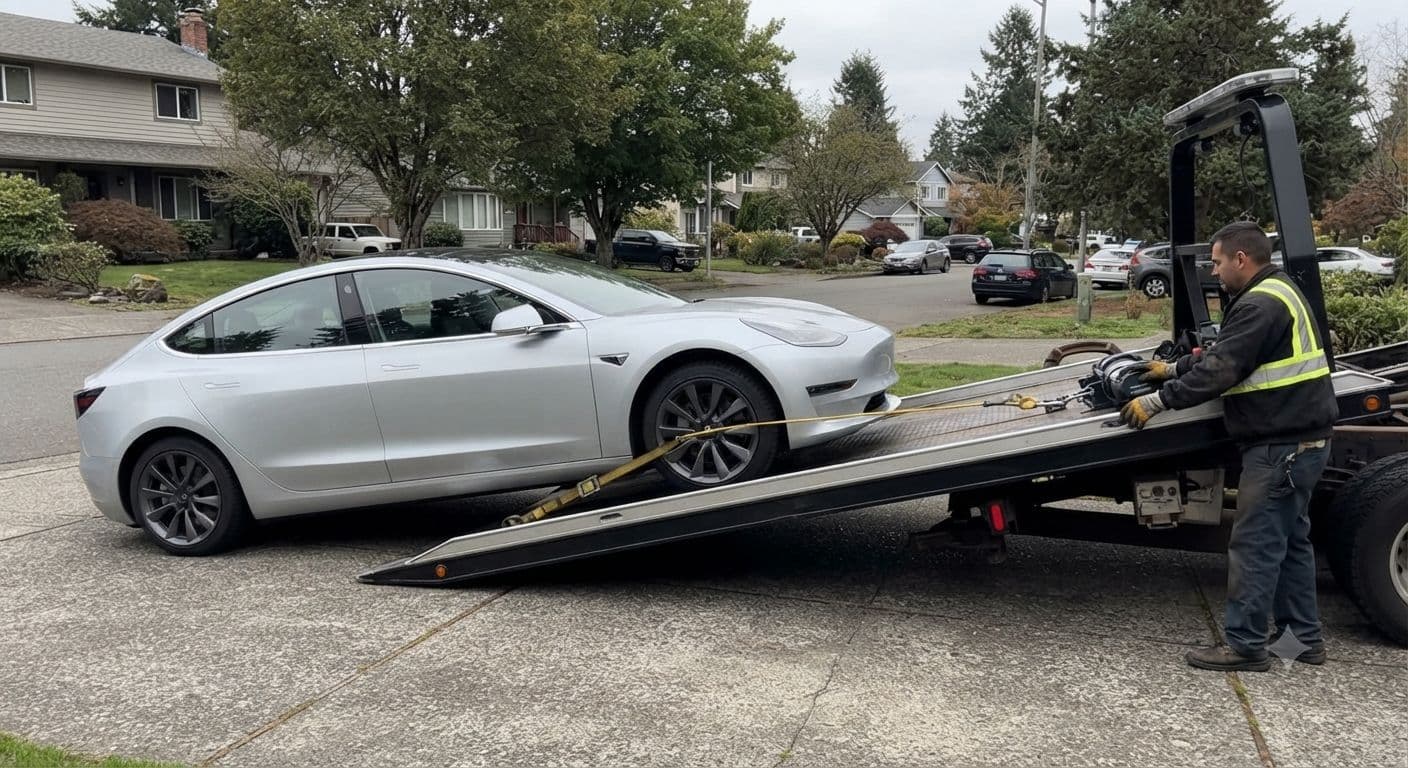
This is where the winch comes in clutch. A winch is basically a heavy-duty cable system that hooks onto the car and pulls it slowly onto the trailer, no engine needed. It works on both enclosed and open flatbed setups.

The catch? Not every carrier rolls with this equipment. A lot of standard car haulers just aren't set up for it, so you gotta specifically ask before you book, not after the truck shows up and can't load your car.

Extra Fees for Shipping an Inoperable EV

Yeah, there's a fee, and honestly it makes sense. Loading a dead car takes more time, more manpower, and specialized equipment, so carriers tack on an inoperable vehicle surcharge, usually somewhere around $150 to $300, sometimes more depending on the situation.

The move here is to just be upfront about the battery status when you get your quote. Hiding it doesn't save you money, it just creates drama on pickup day when the driver realizes the car won't roll.

Are There Safety Concerns With Shipping an EV With a Damaged Battery?

This part's real talk. A dead battery that's simply drained is one thing. A physically damaged lithium-ion battery is a different story — those can pose fire risk, and carriers don't mess around with that.

  • You're legally required to disclose battery damage.
  • Depending on how bad it is, the shipment might even fall under hazmat rules.
  • In some cases, a carrier can flat-out refuse to take the car if the battery looks compromised or there's been any kind of collision or water damage involved.

Always be straight with your shipper about what's actually going on with the battery.

Open vs Enclosed Transport for an EV With a Dead Battery

You've got two main lanes here: open transport or enclosed.

  • Open Transport: Cheaper and works fine for most inoperable EVs, especially if the battery's just dead, not damaged.
  • Enclosed Transport: Costs more, usually a decent chunk more, but it gives extra protection and a lot of enclosed carriers come equipped with the right loading gear already.

If your battery situation is anything sketchy, or your EV is a high-value ride, enclosed is the safer bet even with the higher price tag.

What to Do Before Shipping an EV With a Dead Battery

Quick checklist before you book:

  1. Tell the shipper about the dead battery right away, don't wait till pickup.
  2. Snap photos of the car's condition from every angle; this protects you if anything happens in transit.
  3. Confirm the carrier actually has winch or flatbed equipment, don't just assume.
  4. Figure out if your battery is simply depleted or if there's real damage, since that changes everything.
  5. Ask about insurance specifically for inoperable EVs, because coverage details can shift when a vehicle can't drive itself.

A Dead Battery Doesn't Have to Mean a Dead End

Look, a dead EV battery feels like a dead end at first, but it's really just a detour. Shipping companies deal with this all the time. The whole thing comes down to three moves: be upfront about your battery's condition, find a carrier that's actually equipped for inoperable vehicles, and budget for that extra fee so there's no surprises.

Do those three things and you're golden. Ready to get your EV moving? Reach out and grab a quote built specifically for inoperable EV shipping.

FAQ

How much does it cost to ship an EV with a dead battery?

You're typically looking at standard EV shipping cost plus an inoperable vehicle surcharge, usually $150 to $300 extra. Total cost depends on distance, vehicle size, and whether you go open or enclosed transport.

Can all car shipping companies handle an inoperable EV?

Nope, not even close. A lot of carriers only handle vehicles that can drive themselves on and off the trailer. You need to specifically confirm the company has winch equipment or flatbed capability before you book, otherwise you might get to pickup day and hit a wall.

Is it safe to ship an EV with a damaged lithium-ion battery?

It can be, but it depends on how damaged the battery actually is. A simply dead battery is low risk. A physically damaged or compromised pack raises fire concerns, and carriers may require extra documentation or could refuse the shipment altogether if the risk looks too high.

What's the difference between a dead EV battery and a damaged one for shipping purposes?

A dead battery just means it's drained, no charge, but otherwise structurally fine — that mostly just triggers inoperable handling rules. A damaged battery means there's physical harm to the pack itself, which can raise safety and hazmat flags and changes how the shipment gets handled entirely.

Will my insurance cover an EV shipped with a dead battery?

Most carriers carry liability coverage that still applies to inoperable vehicles, but it's smart to confirm this directly before shipping. Take photos of your car's condition beforehand too, since that documentation is key if you ever need to file a claim.

Share this post