

Guides for First-Time Customers
How to Ship a Classic Car Without the Risk
Protect your classic car during transport and avoid common risks. Get a free classic car shipping quote from Revoway.

Mike Hovhannisyan
14 Sep 26
08 June 2026
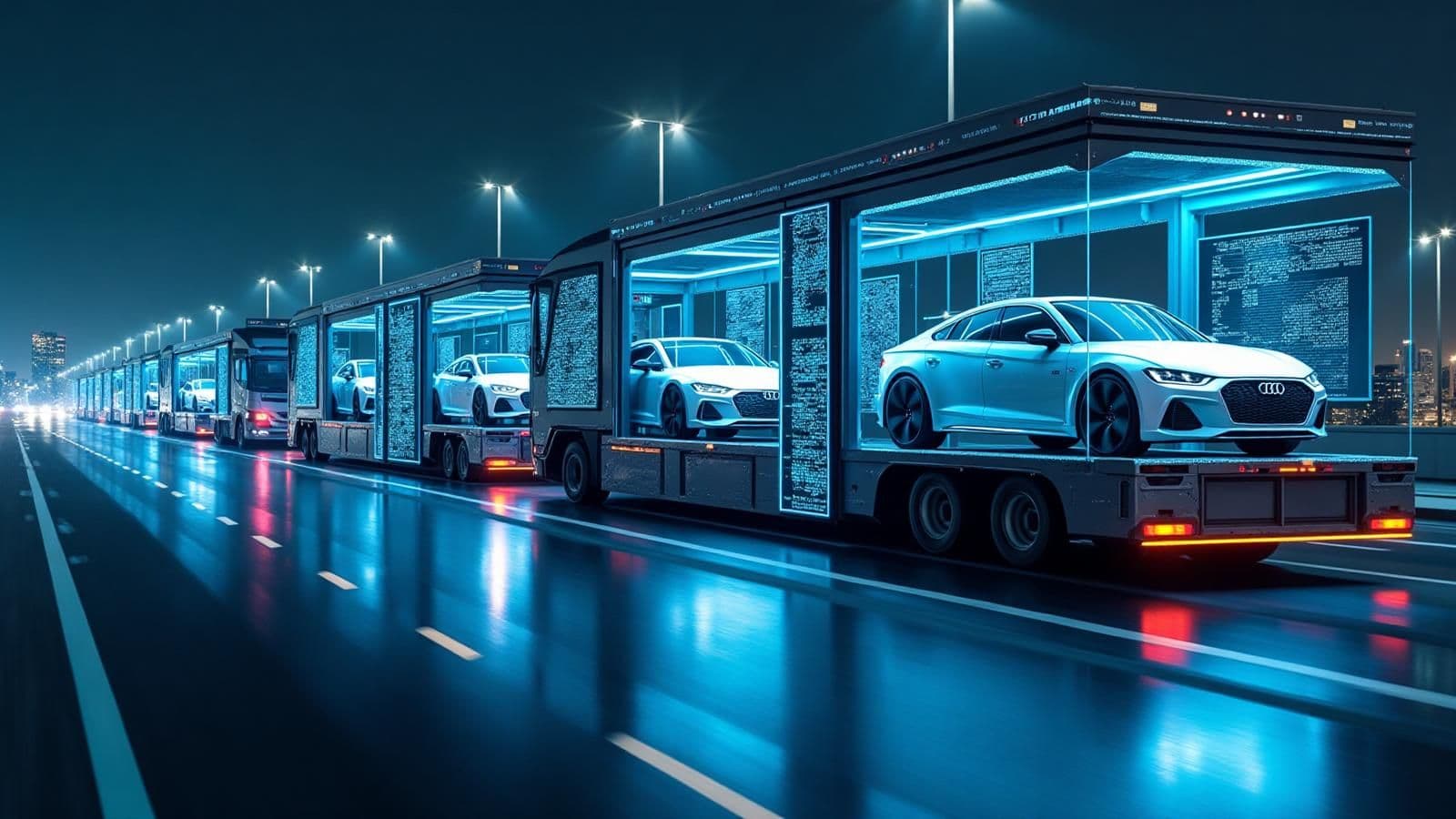
Auto shipping is going digital. Discover how AI, real-time tracking, and automated logistics are making vehicle transport safer and faster with Revoway.

Click the button to start! We are here to be part of your car shipping story. Let's create a lot to tell!
In 2026, more than ever, it is quite marvelous how technology is rapidly revolutionizing the auto shipping industry, shifting from a manual process to a transparent, digitalized one. This shift presents many benefits, including cost savings, safety, speed, reliability, and unmatched peace of mind for every shipper, dealership, and auto carrier. The global freight forwarding market size in 2024 was $56.6 billion and is projected to expand at a 5% CAGR through 2034, driven by technological innovation in the automotive cargo stream.
This blog breaks down how technology is revolutionizing the automotive shipping industry, the opportunities it offers, and how every stakeholder can navigate and leverage this ongoing shift. Let's go!
For decades, the auto transport industry was 100% manually managed and operated. Dispatchers relied on phone calls, brokers used spreadsheets, and bills of lading (BOL) were handwritten and fixed between parties.
Today, these processes have been streamlined and made more efficient, transparent, and reliable by replacing them with digital platforms and models, including electronic bills of lading (eBL/eBOL), cloud-based transportation management systems (TMS), GPS tracking, and mobile apps. This transformation isn't theoretical; it's data-backed, measurable, and faster.
Historically, vehicle shipping depended on:
According to McKinsey & Company, documentation for a single shipment can require up to 50 sheets of paper and exchange among up to 30 stakeholders.
The rise of electronic bills of lading is one of the clearest signs of a digital shift in the auto shipping industry.
The bill of lading acts as proof of shipment, a vehicle condition report, a delivery confirmation, and a legal transport document. In the past, drivers literally carried these documents physically during pickups and drop-offs. Global eBL adoption has increased from 33.0% in 2022 to 49.2% in 2024, showing a massive acceleration compared to just 1.2% in 2021.
Back in the day, vehicle shippers were among the most worried groups. While a car was in transit, shippers often had no idea where it was, relying entirely on delayed phone calls to dispatchers.
Today, real-time GPS tracking systems give customers continuous visibility into vehicle location, estimated arrival times, and route progress. According to Verte's 2022 research, 91% of consumers actively track shipments, and more than 70% prefer self-service tracking over calling customer support.
With about 170 million Americans owning at least one GPS or location-tracking device, live tracking has evolved from a premium feature into an industry-standard requirement. In 2025 logistics tracking reports, 70% of consumers reported using live tracking for flexibility and control, displaying live maps and delivery alerts that drive convenience, transparency, and accountability.
Artificial intelligence is transforming vehicle logistics by optimizing routes to make them smarter, faster, and more fuel-efficient. AI analyzes routes using historical and real-time data on:
This optimization significantly reduces transit times, lowers fuel consumption and operational costs, and makes shipping faster through predictable, optimized routes.
The bill of lading serves as proof of contract between shippers and carriers, vehicle condition details, and a receipt. Traditionally requiring physical signatures, scanning, and emailing, traditional paper workflows often led to delays, lost paper, and administrative overhead.
The Electronic Bill of Lading (eBOL) eliminates these slow processes by offering instant digital generation, sharing, signing, and storage:
Traditional logistics payments often involved physical invoices, checks, manual reconciliation, and delayed approvals. Paperless payment systems streamline operations through:
Now, payments can be made for shipments from anywhere in the world. Approximately 91% of moving and logistics companies now use at least one digital software solution.
Technology-driven shipping enhances safety through transparency, accountability, and secure databases. The shift from paper-based inspections to digital vehicle inspections and pre-transport damage documentation encapsulates:
Traditional vehicle inspection records frequently suffered from missing damage details, illegible reports, inconsistent checks, delayed claims processing, and difficulty proving when damage occurred. Digital inspections solve these issues via:
A 2026 logistics report shows that digital condition reports are becoming the industry standard because they reduce disputes by providing transparency and accountability. Pre-transport documentation—where drivers take thorough photos/videos, check for existing dents/scratches, upload them to the digital system, and secure electronic signatures—improves claim validation accuracy and accelerates processing.
While technology optimizes fast quotes, real-time updates, and paperless payments, algorithms cannot fully replace critical human needs like trust, support, and transparency. That is where Revoway bridges the gap by combining data-driven technology support with accurate communication and human-first customer service.
Understanding the extent of the transformation technology has brought to the auto transport industry highlights improved shipping productivity, procedures, and customer satisfaction. When auto companies join forces with these digital technologies, it unlocks tremendous benefits for shippers. Revoway uses technology to deliver an elite shipping experience for every customer. You can book your space here now.
Technology enhances reliability through real-time GPS tracking and data-driven carrier vetting, ensuring that professionals handle your vehicle and that its location is always transparently visible.
Yes. Modern auto shipping companies like Revoway use digital logistics platforms that provide real-time updates, so you never wonder about your vehicle's status.
Digital documentation—such as electronic Bills of Lading (eBOLs) and digital condition reports—minimizes human error, eliminates paperwork delays, and provides an instant, unalterable record of your vehicle's condition before and after transit.
Yes. Advanced route optimization algorithms allow carriers to plan more efficient trips, reducing fuel consumption and empty mileage, which leads to more competitive and transparent pricing for customers.
Revoway combines advanced logistics software with dedicated customer service, giving you the transparency of an app-based experience and the reassurance of human-led support.
Protect your classic car during transport and avoid common risks. Get a free classic car shipping quote from Revoway.
14 Sep 26
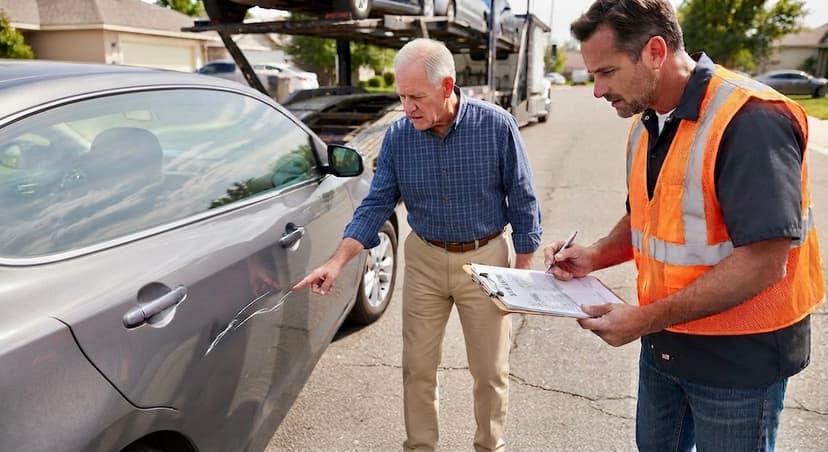
Find out how to file a damage claim after auto transport and what your car shipping insurance covers.
31 Aug 26