
What Happens If Your Car Gets Damaged During Shipping? A Step-by-Step Insurance Claim Guide
Find out how to file a damage claim after auto transport and what your car shipping insurance covers.

How to Ship a Classic Car Without the Risk | Revoway

Click the button to start! We are here to be part of your car shipping story. Let's create a lot to tell!
You can replace a normal car, but a classic car is usually a different story. Maybe it took years to restore. Maybe the paint is original. Maybe the trim is impossible to source now, or the car is worth far more than the odometer reading suggests. Whatever the reason, handing the keys to a transporter feels different when the vehicle cannot simply be repaired with parts from the nearest dealership.
Here is everything you need to know about shipping your classic car without risk.
Most vintage car owners will tell you they would rather count the sand on the beach than see anything happen to their vehicle. You need a transporter who understands this perspective. Every educated owner of a classic car knows that it is an investment. The value of this investment is based on condition and distinctiveness. Take that away, and the only thing you can brag about is a pile of worthless trash fragments. That is why shipping a normal car that you drive every day is not the same as shipping a classic car.
Those scraps here and there will add up, eventually devaluing the car and reducing its authenticity. That is why you want to be sure you choose the best transport, transport choice, and everything else.
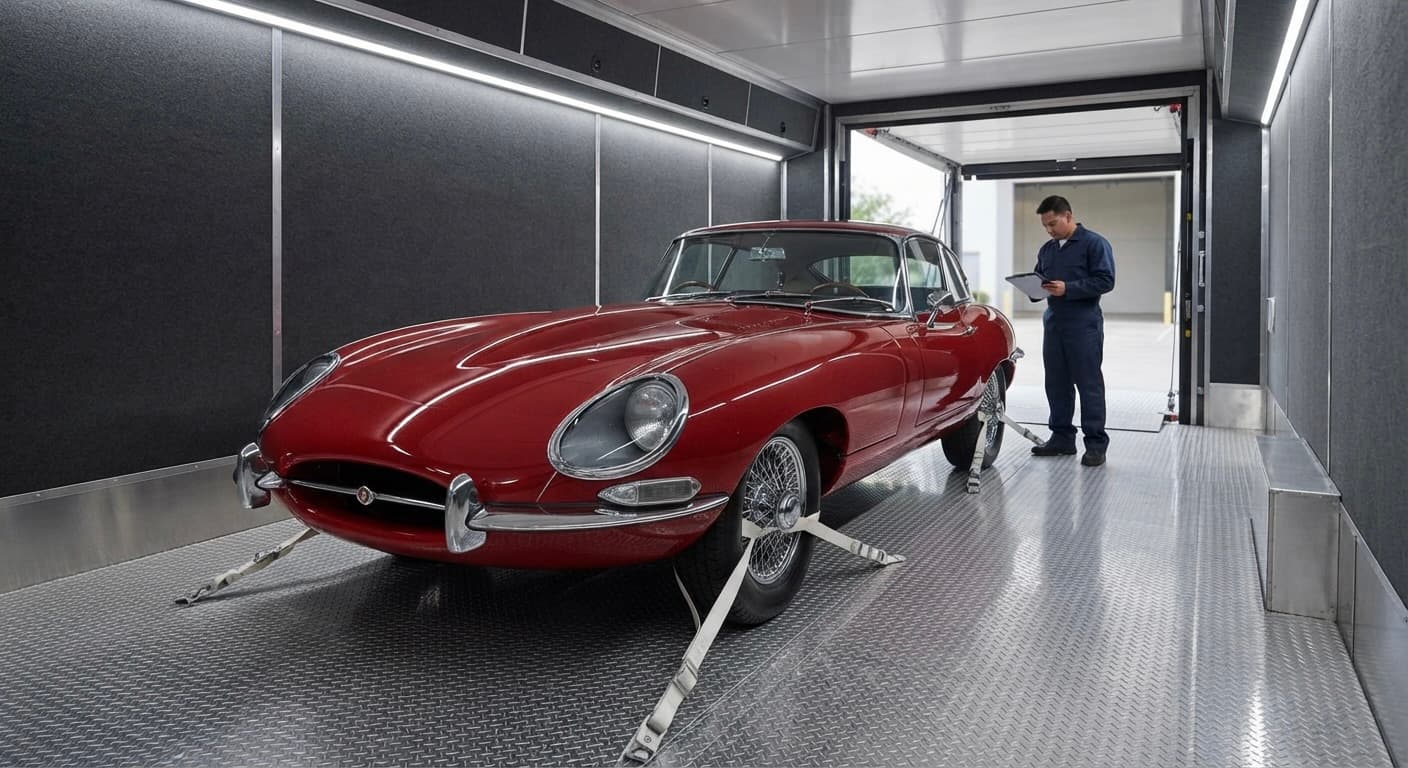
For most valuable classics, enclosed transport makes more sense than open transport. Riding in a covered trailer shields the car from the weather, insects, rain, and road dirt. We can recommend enclosed transportation for expensive and older cars because it offers further protection against exposure to the elements and unforeseen events.
The cost of open transportation is lower. You might be able to save up a little money just by taking public transportation, but you might need to spend the entire week on the edge of your seat, worried that a single scratch will ruin your entire week.
If you're not sure, refer to Revoway's instructions on enclosed or open auto transport.
For a classic automobile, there isn't a single universal price. Numerous factors are taken into account, including the car's size and condition, the route, time, mode of transportation, handling, and distance.
Due to its restricted capacity and specialized equipment, enclosed transportation is more costly. Use Revoway's Car Shipping Cost Calculator to compare its shipping cost guide.
The worst way to choose the right transporter is to limit yourself to just reviews from people who shipped their regular cars. For any transporter you choose, you need to find out what their experience is with classic cars. You need to be sure they are up to date on the knowledge required to transport one.
You should find out if the trailer has a hydraulic lift gate. When you compare it to the steep loading ramps, you would notice that it permits low trucks to enter more level areas. Ask about your car's security as well. Tire-based or wheel-net systems can prevent straps from contacting sensitive suspension or body parts.
You might think all these are excessive, but when you consider how hard it is to get replacement parts, you will agree that nothing here is excessive.
Don't believe that your classic car is automatically protected for its entire worth just because a transporter claims it is "fully insured." Start by requesting the carrier's insurance certificate and, more crucially, the precise coverage for the automobiles being moved. Verify the coverage limit, deductible, exclusions, and whether the limit covers the total load or just individual vehicles. For a collectible automobile valued at $80,000 or $150,000, this is far more important than for a regular daily driver.
Keep your own classic car insurance active during transport as well. A specialist collector policy may use agreed-value coverage, meaning you and the insurer establish the car’s insured value beforehand. If the vehicle is a covered total loss, that agreed amount is used rather than calculating its value like an ordinary depreciating car.
Before pickup,
At pickup,
There are some mistakes classic car owners make that affect their cars during shipping. Take note of them so you won’t make the same mistakes.
The key to safely transporting a collector car is having the right tools, insurance, and experience.
Prior to pickup, confirm the business, record the vehicle, and ask any questions. Instead of forcing the car into a routine procedure, Revoway can help you plan the move and compare options.
Not always, but it is usually the better choice for valuable, original, restored, or cosmetically sensitive cars.
Cost depends on distance, transport type, vehicle size, condition, timing, and special handling needs.
Not automatically; verify the carrier’s policy and keep your own collector-car coverage active.
Yes, provided the carrier has suitable winching or loading equipment.
Book as early as practical, especially for enclosed transport, auctions, shows, or fixed delivery dates.